Thursday, July 17, 2014

Stormies!

This last Saturday (July, 12th) at 8 o'clock on a sunny morning, we headed out from Fuzeta for about 5 miles off shore and saw a lot of marine birds. Regarding Storm Petrels, particularly Wilson's Storm Petrels (Oceanites oceanicus) this was one of the best trips I ever made. We must have seen around 30 birds of this species out of a total of 41 Storm Petrels observed during the 2,5 half hours trip, many of them close to the boat, sometimes less than 5m. Best views and photos were possible when we approached a small trawler at about 4.5 miles off shore, where around 30 Storm Petrels, including a few European Storm Petrels (Hydrobates pelagicus) were feeding. Some fast "traveling" Petrels on our way out or back in could not be idetified on species-level. Also remarkable was the amount of Baleric Shearwaters (Puffinus mauretanicus) we saw: 28 Ind. - 26 birds were traveling westwards (in groups of 2 to 6 Ind., the species nests in the western Mediterranean) between less than 1 mile and c. 2.5 miles off shore. Two birds were hanging around the fishing vessel and gave very good views. Numbers of Cory's Shearwaters (Calonectris (diomedia) borealis) were still rather low - about 10 Ind. and only a few immature Northern Gannets were around. A single Manx Shearwater (Puffinus puffinus) quite a few Audouin's Gulls and one Black Tern (Chlidonias niger) were other sea birds of interest. We did not see any Cetaceans (Whales&Dolphins) on this trip - but did not miss them much either. My Danish clients were really happy - since the both Storm Petrels were their main target species and we got plenty and close by. I include some photos I made during the trip.

For the next trips scheduled, please read my previous blog-entry or contact me.

Wilson's Storm Petrel (Oceanites oceanicus) feeding within a mixed group. C. 4.5 miles off shore. Algarve, Portugal, July 12th 2014. Foto: GS. The birds shows heavy moult of the remiges.

 Wilson's Storm Petrel (Oceanites oceanicus)  note the toe-projection over the tail tip. C. 4.5 miles off shore. Algarve, Portugal, July 12th 2014. Foto: GS.


 Another Wilson's Storm Petrel (Oceanites oceanicus) Note the three retained outer primaries and the inner secondaries freshly replaced. C. 4.5 miles off shore. Algarve, Portugal, July 12th 2014. Foto: GS.

 Wilson's Storm Petrel (Oceanites oceanicus) note different feather generations. C. 4.5 miles off shore. Algarve, Portugal, July 12th 2014. Foto: GS.

 An European Storm Petrel (Hydrobates pelagicus) with the striking white underwing coverts and missing toe projection. Most probaly a "British Storm Petrel", since records of the Mediterranean (sub?)species are extremely rare, but ID in the field technically impossible.

 Detail of a Wilson's foraging. I wish the head would be visible somewhere in the photo, since this one is nice and sharp...

"Stormie" taking off...

Tuesday, July 1, 2014

Pelagic boat-trips - New dates for summer and autumn

It is high season now to watch pelagic sea-birds and Cetaceans in the Algarve. Cory's Shearwater, Balearic Shearwater, Great Shearwater and Sooty Shearwater, Wilson's- and European Storm Petrels are regular migrants seen in the Algarve, besides Skuas, Gannets and various Tern- and Gull-species.

The new dates scheduled for 2014 (more dates on request):

Sat., July 12th; Fr., July 25th; 
Sat., August 23rd; 
Fri., September 5th; Sat., September 20th; 
Thu., October 09th; 
Sat., November 1st.

For further Info visit: http://www.birdwatching-algarve.com/pelagic-boat-trips.html

Wednesday, April 30, 2014

Big birds of prey

Yesterday and the day before, I have been leading Tours up in the Alentejo-region, well one hour in land from the Algarve coast. Besides both Bustard-species, Black-bellied Sandgrouses, Collared Pratincoles and European Rollers seen on both Tours, yesterday's Tour had been particularly successful regarding the impressive large raptors - of which we got very close and extended views, without disturbing these wonderful birds, as shown in the photos below.


Eurasian Black Vulture (Aegypius monachus) 29/04/2014Guadiana River Natural Park, 

Baixo Alentejo region, south Portugal. Photo: Georg Schreier.


 Eurasian Black Vulture (Aegypius monachus) same Ind. as above. 29/04/2014
Guadiana River Natural Park, Baixo Alentejo region, south Portugal. Photo: Georg Schreier.


Eurasian Black Vulture (Aegypius monachus) a different Ind. of at least 7 birds present at the location. 
29/04/2014. Guadiana River Natural Park, Baixo Alentejo region, south Portugal. Photo: Georg Schreier.


Eurasian Griffon Vulture (Gyps fulvus) one of 50+ Ind. at the spot. 29/04/2014: Photo: GS.


Spanish (Iberian) Imperial Eagle (Aquila adalberti) this older immature was one of 4 Ind. present at the location. Earlier we observed a full adult male together with an immature female. 29/04/2014. Photo: GS.


Egyptian Vulture (Neophron percnopterus) in it's second calender year. 
This migratory species is a rare visitor to the area. 29/04/2014. Photo: GS.


The wonderful meadows full of wild flowers in April are home to Great- and Little Bustards, Calandra Larks and many others.


The top-predator of the "steppes" - the Spanish Imperial Eagle (Aquila adalberti). 
I digiscoped this immature during a Tour with a group of 6 people earlier this month.


Scattered Holm Oaks (Portuguese: "Montado") flowering Gum Cistus and the wide open fields. Imagine the continous songs of Calandra Larks, occasional calls of displaying Little Bustards and a male Montagu's Harrier soaring above the scenery - south Portugal in spring.

Friday, March 7, 2014

Spring migration!

Africa migrants have started to appear in the Algarve and will do so increasingly from mid March onwards, with most of the trans-Sahara migrants returning. I spent two days visiting the marvellous Coto Doñana Natural Park in Andalusia, Spain - only an about two hours drive from Faro this week. One of the photos that turned out well is this adult Short-toed Eagle, which must have returned from his wintering areas in Africa recently.

Adult Short-toed Eagle (Circaetus gallicus), Parque Natural Coto de Doñana (E), 05/03/2014. Photo:GS.


Wednesday, February 19, 2014

Glaucous Gulls in the Algarve !

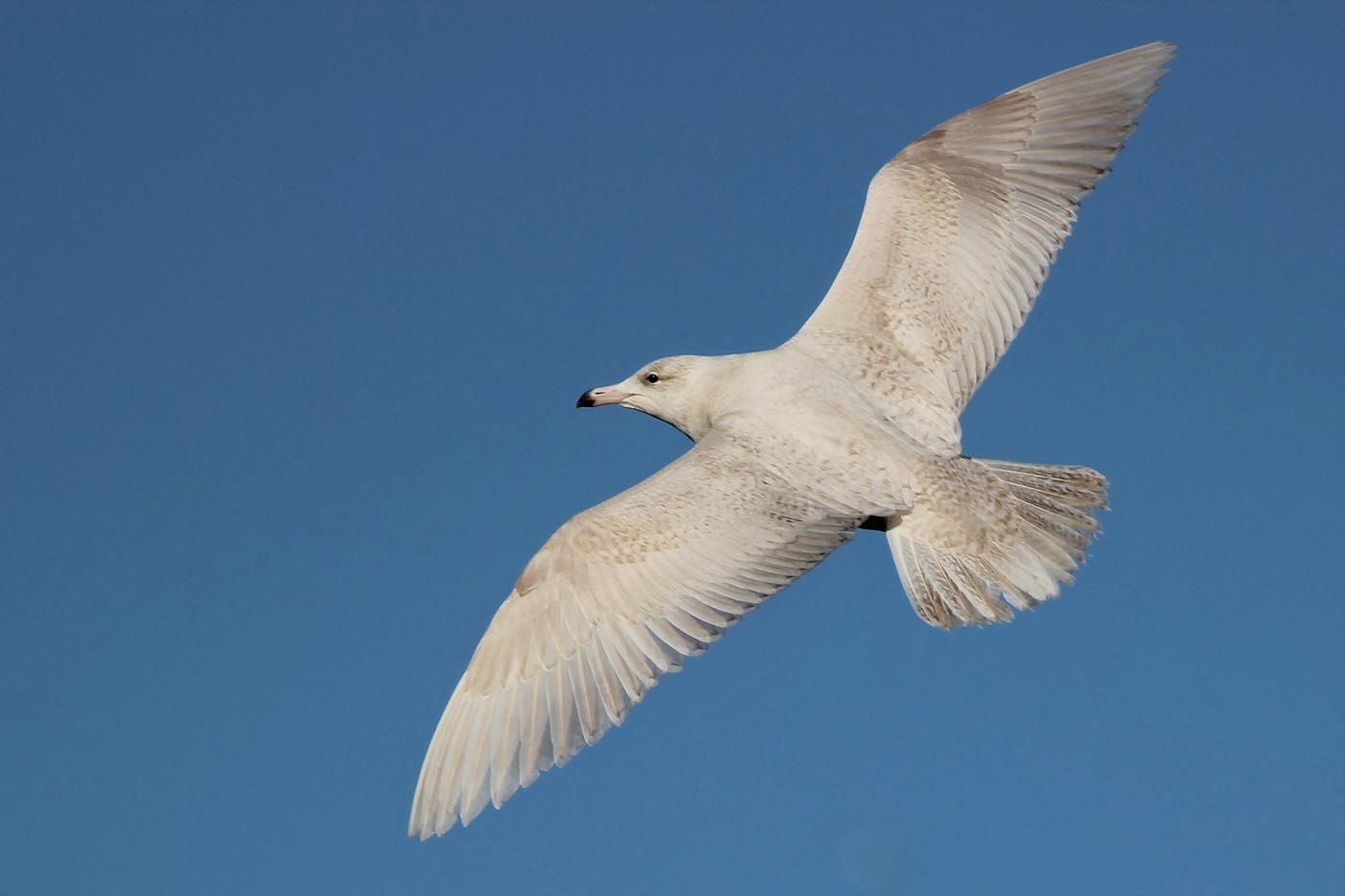
Glaucous Gull (Larus hyperboreus) 1st winter. Sagres harbor, Feb. 18th 2014. Foto: Georg Schreier.


Glaucous Gull (Larus hyperboreus) 1st winter. Sagres harbor, Feb. 18th 2014. Foto: Georg Schreier.


Glaucous Gull (Larus hyperboreus) 1st winter. Sagres harbor, Feb. 18th 2014. Foto: Georg Schreier.


Glaucous Gull (Larus hyperboreus) 1st winter. Sagres harbor, Feb.18th 2014. Foto: Georg Schreier.


Glaucous Gull (Larus hyperboreus) 1st winter. Sagres harbor, Feb. 18th 2014. Foto: Georg Schreier.


A series of north Atlantic storms have caused the biggest influx of Arctic Gulls to the Algarve since February 2009. Yesterday, I photographed three different Glaucous Gulls (Larus hyperboreus) in the fishing harbor of our "cape-town" Sagres. All birds were in there second calender year and feeding on fishery discard. A full adult was still present in the fishing harbour of Portimão yesterday afternoon, where me and others have discovered it in early January already. What a pleasure to watch and photograph these arctic beauties here in the wonderful and mild spring weather of the Algarve !


Glaucous Gull (Larus hyperboreus) 1st winter. Sagres harbor, Feb. 18th 2014. Foto: Georg Schreier.


Glaucous Gull (Larus hyperboreus) 1st winter. Sagres harbor, Feb. 18th 2014. Foto: Georg Schreier.


Glaucous Gull (Larus hyperboreus) 1st winter. Sagres harbor, Feb. 18th 2014. Foto: Georg Schreier.


Adult Glaucous Gull (Larus hyperboreus) Portimão fishing harbor. Feb. 18th 2014. Foto: Georg Schreier.


Adult Glaucous Gull (Larus hyperboreus) Portimão fishing harbor. Feb. 18th 2014. Foto: Georg Schreier.


It has been only the day before (Monday), that on a day tour with clients, we watched Spanish Imperial Eagles hunting hares and Black-winged Kites mating, Great Bustards, Lesser Kestrels, Stone Curlews, Hen Harriers and Great Spotted Cuckoos. I am still fascinated by the diversity Southern Portugal has to offer throughout the year. At the moment, arctic birds meet the first arriving Africa-migrants here.

Tuesday, January 7, 2014

New year's birds

Common Cranes (Grus grus) in the Alentejo yesterday, January 6th 2014 (Photo: GS)


Very happy with my new photo lens, making a lot of bird photos now, while before I was taking photos soleley through the telescope (digiscoping).
Right now I am rebuilding my webpage, to update it and solve some technical issues.
I have been a on a intensive 4-days Tour through the Algarve and parts of the lower Alentejo until yesterday, mainly focussing on Gulls, of which we saw 11 species, including an adult Glaucous Gull (Larus hyperboreus) on Sunday. We also read about 50+ colour rings of Gulls - more about this later. Other rarities around the past days we saw were a Lesser Yellowlegs (Tringa flavipes) near Faro and a juvenile Great Northern Diver (Gavia immer) at the fishing harbour of Lagos.


Black-winged Kite (Elanus caeruleus) at Ponta da Erva / Lisbon. December 29th 2013. (Photo:GS)